Teacher Welcomes Students Back to School: A Strategic Asset for Clear Communication and Lasting Engagement
A new school term represents more than a date on the calendar. It signals renewal, fresh opportunity, and a reset of expectations. For educators, administrators, and anyone involved in educational communication, the concept of “Teacher Welcomes Students Back to School” carries strategic weight. This is not merely a polite greeting. When executed well, a welcome-back approach becomes a foundational piece of your outreach—whether you design a classroom poster, prepare a digital campaign, or craft materials for a school-wide initiative. Understanding how to use this message with intention can improve clarity, build trust, and support long-term engagement with students, parents, and the wider community.
This article examines how to approach the return-to-school message thoughtfully. We will explore practical use cases, planning considerations, and the risks of deploying such content without clear purpose. You will also learn how file formats like JPG, SVG, PDF, EPS, and PSD affect your ability to adapt the message across different media. The goal is to help you make better decisions, not just create something that looks pleasant.
Why the Welcome-Back Message Matters Beyond the Surface
A genuine welcome sets the tone for the entire term. Students arrive with a mix of anticipation and uncertainty. Parents watch for signals that the school environment is organized and caring. Staff look for alignment and morale. The teacher who welcomes students back is not just being polite—they are framing expectations, reducing anxiety, and building a bridge between home and school.
For entrepreneurs and creators who produce educational content, this message is equally significant. A welcome-back illustration or greeting card can serve as a marketing touchpoint, a brand reinforcement tool, or a product that meets a seasonal demand. When you treat this message as a strategic communication asset rather than a decorative afterthought, you gain an edge in relevance and resonance.
The decision to invest in high-quality welcome-back materials—whether as a school, a freelance designer, or a marketer—should be driven by an understanding of your audience’s emotional state. Children need reassurance. Parents need information and warmth. Teachers need a sense of shared purpose. A thoughtful welcome addresses all three.
Practical Applications Across Media and Formats
One of the strengths of a well-designed welcome-back concept is its versatility across formats. You might produce a flat illustration that works as a greeting card, invitation, poster, banner, web graphic, or flyer. Each medium serves a different strategic purpose. Understanding which format to use and how to prepare it saves time, reduces cost, and ensures consistency.
File format decisions directly affect how you can use your content. For example:
- JPG works well for web use and email campaigns where file size matters. It is not ideal if you need to edit text or resize without quality loss.
- SVG provides scalability for responsive web design. If your welcome message appears on a school website or a digital banner, SVG keeps the illustration crisp on any screen size.
- PDF supports print-ready layouts for flyers, posters, and brochures. It is reliable for distribution to print shops or for sharing with colleagues who may not have design software.
- EPS and PSD give you editable source files. If you plan to customize the welcome message for different grades, languages, or branding needs, these formats preserve layers and allow rapid adjustments.
When you plan a campaign or a classroom preparation, think ahead about which formats you will need. A marketer who only produces JPG files may later struggle to adapt a poster for a banner. A teacher who only saves a PDF may be unable to change the teacher’s name for a different class. Strategic format selection prevents these bottlenecks.
When to Use the Welcome-Back Concept and How to Approach It
Timing matters. The most effective welcome-back materials appear before the term begins, not after. If you are a school administrator, you might send a digital greeting card one week before classes resume. If you are a creator selling illustrations, your marketing should peak two to three weeks before the typical school start dates in your region.
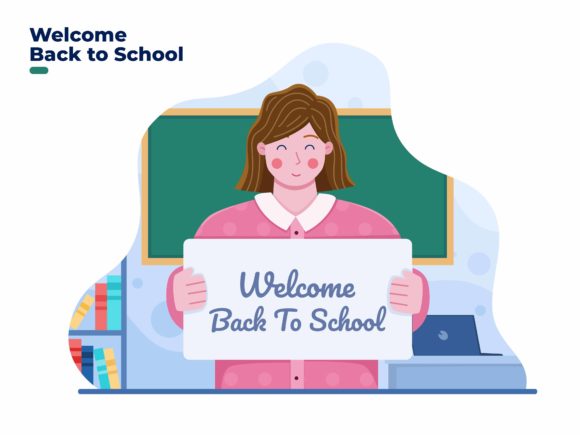
Approach the design and messaging with empathy. A flat illustration of a teacher greeting students at the classroom door can convey warmth without overwhelming detail. The visual style should match the tone of your school or brand. A playful, colorful illustration suits an elementary setting. A clean, modern style may work better for high school or corporate training contexts.
Consider the user experience from the recipient’s perspective. A parent opening a welcome-back email wants to know: What does my child need? When does school start? Who is the teacher? How can we prepare? Your illustration and text should either answer these questions directly or point to where the answers live. A beautiful design that hides key information is a wasted opportunity.
When you create content for your own use, ask yourself: Does this communicate care? Does it reduce uncertainty? Does it invite participation? If the answer to any of these questions is no, refine the concept before production.
Strategic Planning for Long-Term Value
A one-time welcome message has limited impact. The real value emerges when you treat the return-to-school concept as part of a larger communication strategy. For example, you could develop a series of illustrations that evolve across the school year—welcome back, fall updates, holiday greetings, spring milestones, and end-of-year celebrations. This creates a consistent visual language that families recognize and trust.
For marketers and small business owners, this approach builds brand recognition. A parent who sees the same illustration style on a welcome card, a classroom poster, and a social media banner begins to associate that style with reliability and warmth. Over time, this association translates into loyalty and word-of-mouth referrals.
Planning for long-term use also means investing in editable formats. Save your source files (PSD, EPS, SVG) in a well-organized folder. Name them clearly. Keep a log of which versions you used for which purposes. This discipline saves hours of rework when you need to update a date, change a name, or adapt a design for a new audience.
Risks of Using This Content Without Clear Goals
The most common mistake is treating a welcome-back illustration as decoration rather than communication. A generic image with no specific message can feel hollow. If the illustration shows a teacher smiling but the accompanying text is vague or missing, the recipient may not feel welcomed at all. They may perceive the effort as superficial.
Another risk is inconsistency. If your school sends a warm, illustrated welcome card but then follows up with cold, bureaucratic emails, the initial goodwill erodes. The welcome must be supported by the actual experience. Similarly, a marketer who sells a beautiful welcome-back poster but cannot deliver the file in the format the customer needs will lose credibility.
Over-reliance on visuals can also obscure important information. A poster that looks cheerful but fails to include the start date, classroom number, or teacher’s name causes confusion. Always balance aesthetics with utility. Use the illustration to draw attention, but make sure the critical details are clear and prominent.
Finally, beware of tone mismatches. An overly formal illustration may feel distant to young students. A cartoonish style may undermine the authority of a high school teacher. Know your audience and choose visual cues that align with their expectations.
Decision-Making Guidance for Different Roles
Depending on your role, the welcome-back concept serves different purposes. Here is practical guidance for common scenarios:
- Teacher or school staff: Focus on clarity and warmth. Use a simple poster or flyer that includes your name, room number, and a brief welcoming message. Choose a PDF format for easy printing. If you have design support, request an editable PSD so you can reuse the template each term.
- School administrator or communication lead: Plan a multi-channel rollout. Use an SVG for the website banner, a JPG for email headers, and a print-ready PDF for physical posters. Ensure all versions share consistent colors and typography. Coordinate the release schedule so families see the message repeatedly across different touchpoints.
- Freelance designer or illustrator: Create a modular illustration that can be adapted for different grades, schools, or languages. Offer your work in multiple formats (JPG, SVG, PDF, EPS, PSD) to meet varied client needs. Market the series as a system, not a single file. This positions you as a strategic partner, not just a vendor.
- Small business owner or entrepreneur: If you sell educational products, use the welcome-back theme as a seasonal campaign. Bundle greeting cards, social media templates, and printable posters. Emphasize the formats you offer so customers know they can use your content across print and digital channels.
Making the Welcome Intentional and Memorable
The most effective welcome-back materials are those that feel personal, even when produced at scale. You can achieve this by leaving space for customization—a blank area where a teacher can write a handwritten note, or a text layer that can be edited in PSD or EPS. Small touches like these transform a generic illustration into a meaningful connection.
Pay attention to color psychology. Warm tones like orange and yellow suggest enthusiasm and energy. Cool blues and greens convey calm and trust. Avoid overstimulating patterns that distract from the message. The best designs guide the eye naturally to the key information: the teacher’s name, the date, and the greeting.
Test your materials with a small group before full deployment. A quick review by a few parents or colleagues can reveal missing details, unclear phrasing, or design flaws. This is especially important if you are using the content for a client or a large school system where errors multiply quickly.
Remember that the welcome-back message is not just for the first day. It can be reused for mid-year transfers, new student orientation, or even as a template for welcoming guest speakers or volunteers. When you build a flexible system around this concept, you extend its lifespan and return on investment.
Aligning Content With Broader Goals
Every piece of communication you produce either supports or undermines your larger objectives. A welcome-back illustration that aligns with your brand values reinforces trust. One that feels disconnected or generic erodes it. Before you create or commission any content, write down the specific outcomes you want to achieve. Examples include:
- Reduce first-day anxiety for students.
- Increase parent attendance at orientation events.
- Boost open rates for school emails.
- Generate leads for an educational product or service.
- Establish a consistent visual identity across campus communications.
When you define the goal first, the design and format decisions become obvious. You will know whether you need a PDF flyer or an SVG web banner. You will know whether the tone should be playful or professional. You will know which file formats to prioritize. This clarity prevents wasted effort and ensures your welcome-back message works as hard as you do.
Ultimately, the value of “Teacher Welcomes Students Back to School” lies not in the illustration itself, but in the thoughtfulness behind its creation and deployment. Use it as a tool to connect, inform, and reassure. When you do, that simple act of welcome becomes a strategic advantage that lasts well beyond the first day of class.